What has been shaping a response from below, the pattern, the inheritance, the thing never quite said, can be brought into view. Seeing it is what makes a different choice possible. The rest of PATH Method is about what you do once you can see it.
“The ability to see the characters that live on the inner stage of one’s psyche, through a wish and a gesture, makes the unseen seen, and this makes new choices possible.”
Dr. Raoul Goldberg, MD, PhD
The Hand Map
The whole method, in one hand
PATH Method holds together in a single image, the Hand Map. A seed rests in the palm, the issue you bring, and five actions carry the work, one to each finger.
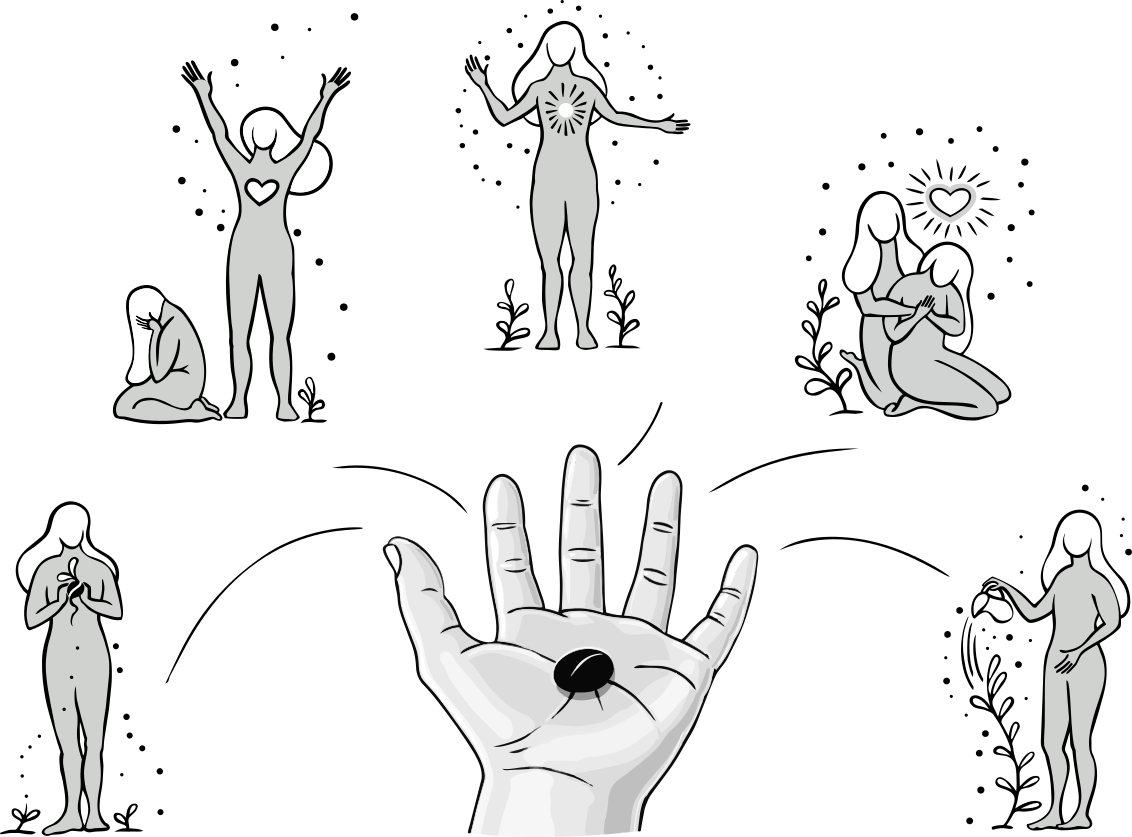
The five figures around the hand are the five actions, detailed below.
A seed and five actions
The seed in the palm, five actions on the fingers
The seed is the issue held in the palm. From it, five actions carry the work, from the first stirring of intention to the practice that makes a change hold.
The Seed
The issue, pattern or potential you bring. Where the work begins.
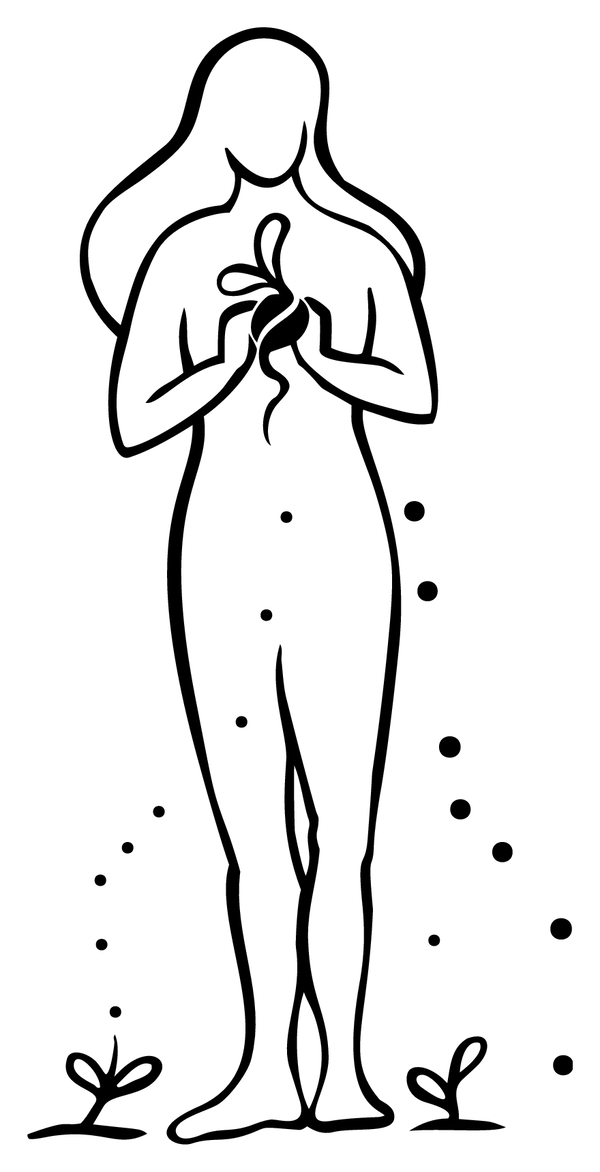
1
Healing Intention
The desire and intention for change, naming not only what you want to stop but what you want to become.
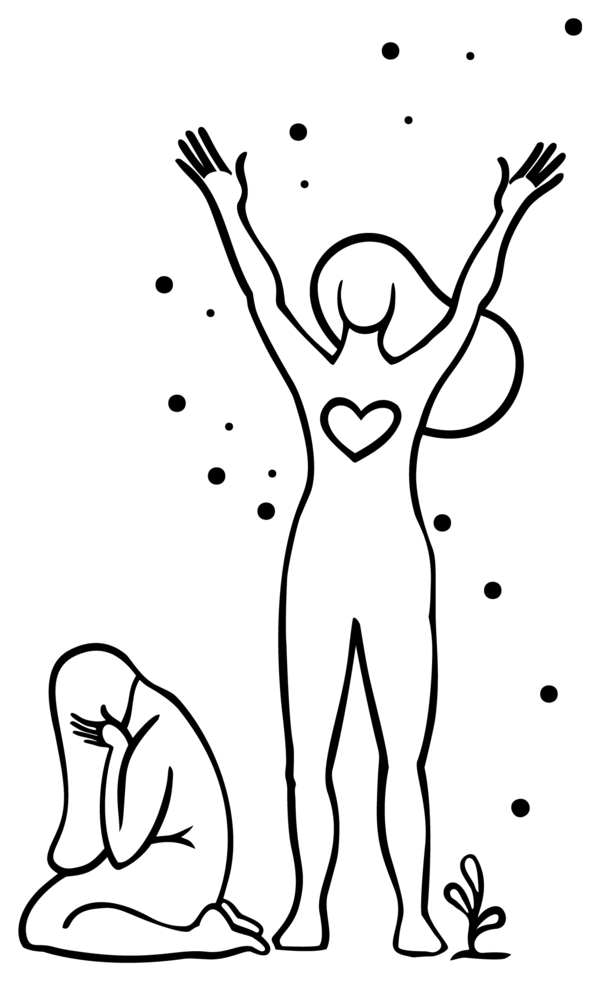
2
Expressive Gesture
Letting the body give form to what words have not yet reached.
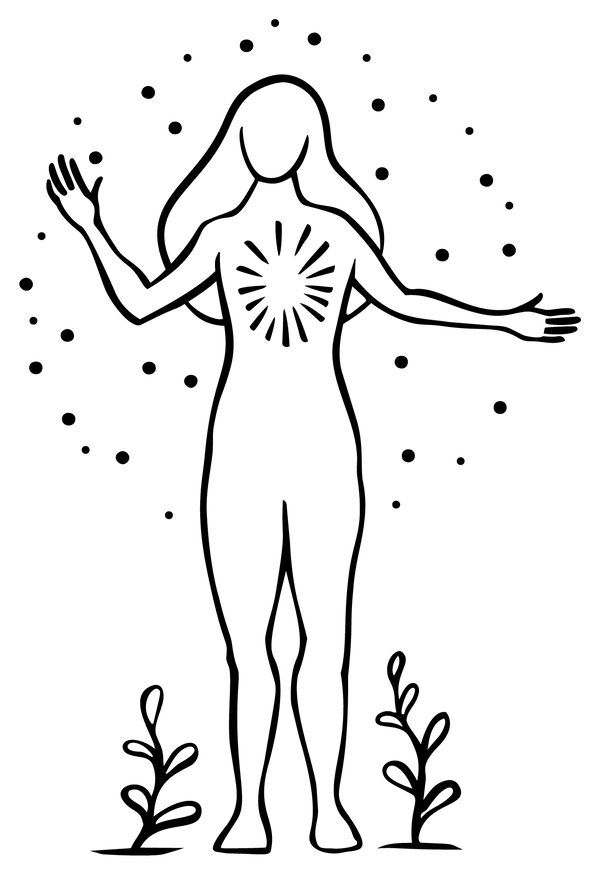
3
Witness and Direct
Stepping back to observe the inner dynamic, then engaging with it consciously.
4
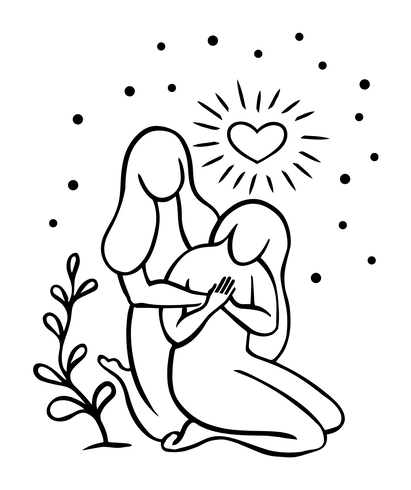
Resource–Remedy
Introducing the quality, capacity, figure or action the moment requires.
5
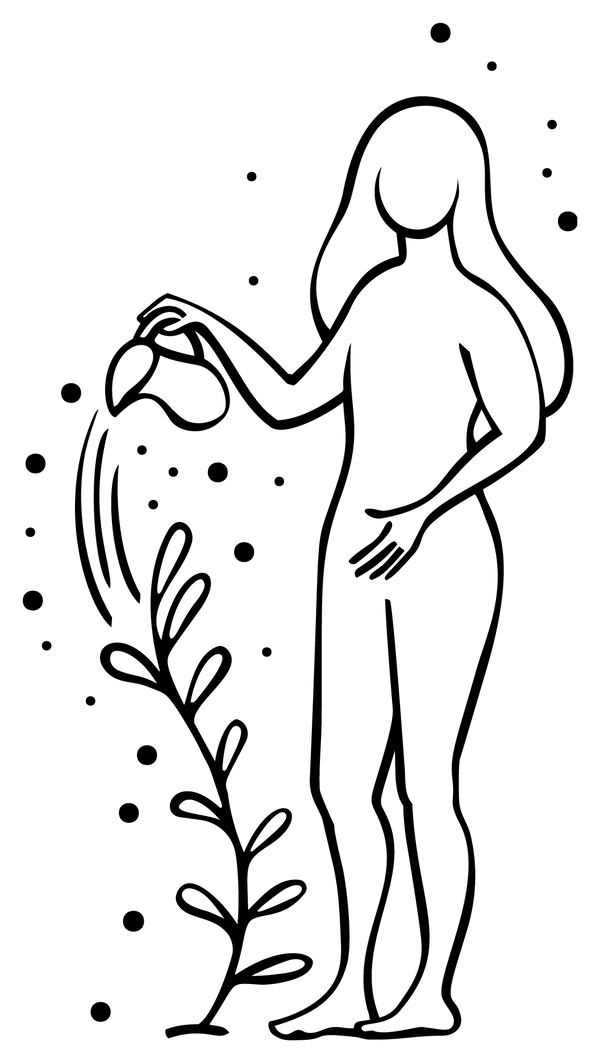
Practice and Integration
Rehearsing the new response until it becomes available in ordinary life.
At the resource step, something new is brought onto the stage. A character is cast into the scene, a figure who embodies what the moment needs: the protector who wasn’t there, the voice that can say no, the steadiness that was missing. Characters brought into the psyche this way are real to the imagining mind, and that is what lets the inner scene reorganize around them.
The same method, at two resolutions
The five actions are the memorable core. In facilitated clinical practice they sit within a twelve-phase framework that adds what a session needs around them: consent, presence, agency, and follow-through. The Hand Map is not a simplification of the twelve phases, it is how the twelve are carried.
Stage one
Finding my empowerment
1 Will and Commitment · 2 Presence · 3 Empowerment
The ground. Consent, readiness, shared presence, and the patient’s sense of agency in their own process.
Stage two
My healing intention
4 Presenting Issue · 5 Healing Intention · 6 Expressive Gesture
Naming what is actually there, forming a genuine intention, and letting the body speak.
Stage three
Understanding my wound
7 Witness · 8 Director · 9 Resource–Remedy
Observing the pattern, engaging it from that vantage, and introducing what is needed.
Stage four
Living my transformation
10 Transformation · 11 Practice · 12 Integration
Letting the shift take hold, rehearsing it, and embedding it in daily life.
The inner physician example
Within the psyche lives many characters, some imprints and reinforcements of experiences developing lifelong inner characters that automatically respond to life situations. PATH Method allows one to see these inner stage characters and allows one to cast a new characters into the inner stage we know as the psyche.
Dana Smirin met her “the inner physician” so that she and Dr. Goldberg could work together to design a pathway towards her healing from a Lymphoma diagnosis.
"I was no longer a medical record number, a victim of the medical system. In this moment I stepped into my power as a patient. It was a page turner moment seeing my oncology team as my vendors and I began to direct the healing program that made sense to me".
Dana Smirin
From this view a symptom is not only a malfunction to be corrected from outside. It may also be the visible expression of that intelligence doing its best with what it has. The practitioner’s task shifts accordingly, from intervening upon a passive body to entering into relationship with an intelligence that was never absent.
This is a way of listening, not a claim about what causes illness. It sits alongside medical assessment and treatment; it does not substitute for either.
Measured, in a preliminary way
An observation in 2016, with the HeartMath Institute and the Institute of Noetic Sciences, prompted a question: if something shifts in the body during a PATH Method session, where in the sequence does it shift? In 2020 we recorded fifty-one full sessions to find out. Heart-rate variability rose at two points, the healing wish and the remedy. These are preliminary findings from a single uncontrolled study, currently being re-verified.
What the study does and does not show →
What PATH Method does not claim
- It does not diagnose disease or psychiatric conditions, and is not a substitute for medical or psychological assessment.
- It does not reduce physical illness to psychological causes. Symptoms have biological, structural, genetic, pharmacological, social and environmental contributors, usually interacting.
- It has not been shown through research studies to produce lasting change. Our research to date covers single sessions.
- It has not been compared against other methods under controlled conditions, and we make no claim to work better than other approaches
- It is not a proven crisis intervention
Go deeper
- Philosophy, the developmental view behind PATH Method.
- In clinical practice, how PATH Method is used alongside integrative medical care.
- Research, what has been measured, and what it shows.